
Wildlife Near Bailey, Colorado: What to Know Beyond Bears
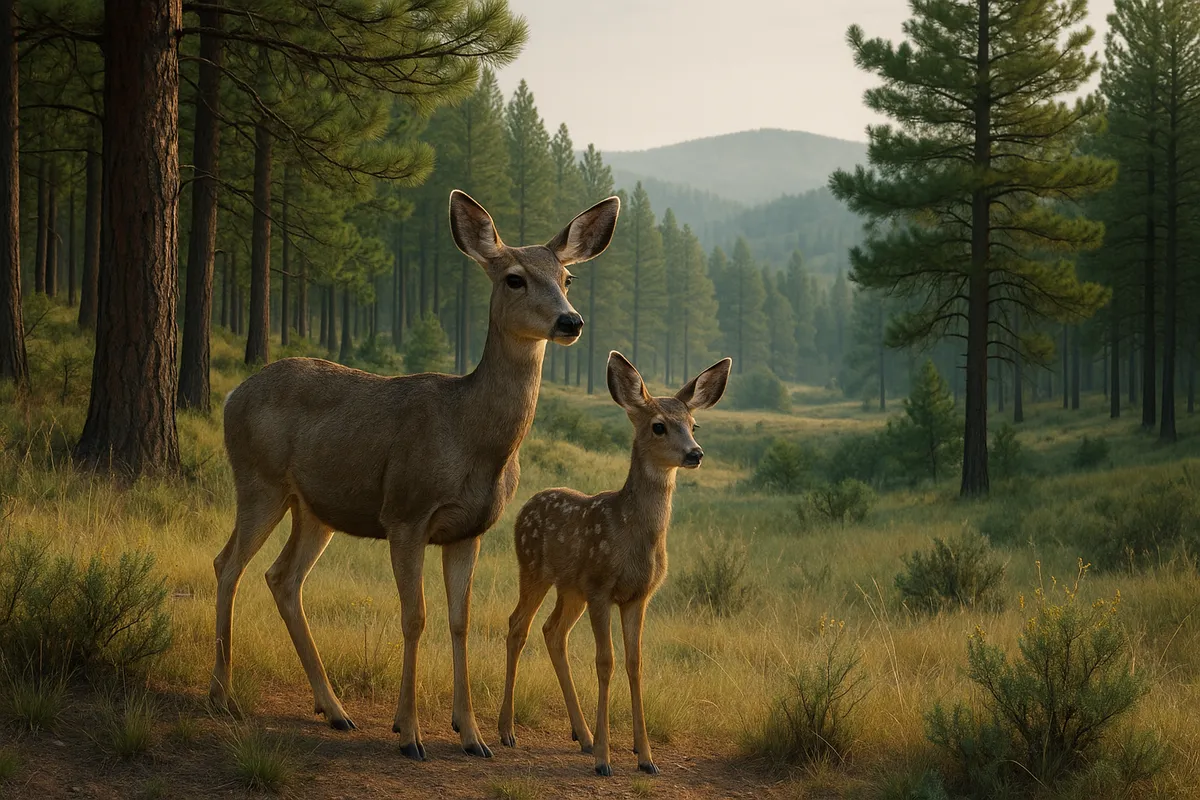
Bears understandably dominate the wildlife conversation around Bailey, but they're far from the only animals you're likely to encounter in Park County's forests and river corridors. Elk, mule deer, moose, coyotes, mountain lions, and even rattlesnakes all share this landscape, and each comes with its own set of practical considerations for visitors. This guide rounds up what to expect, when you're most likely to see wildlife, and how to plan hikes, bike rides, and pet walks with a bit more confidence.
Quick takeaways
- Elk and mule deer are the animals you'll see most often, especially at dawn and dusk in meadows and along Highway 285.
- Moose sightings are increasing in the South Platte drainage; they're more dangerous than bears if approached.
- Mountain lions are rarely seen but are present throughout the foothills; most encounters are avoided simply by making noise on trails.
- Rattlesnakes are active at lower elevations in warmer months, particularly on sunny, rocky slopes.
- Keeping dogs leashed isn't just a courtesy here — it's genuinely important for avoiding wildlife conflicts.
Elk and mule deer: the ones you'll actually see
If you spend any time outside in Bailey, elk and mule deer are the wildlife you're most likely to encounter, often without even trying. Elk move through in herds, especially in fall during the rut, and are commonly spotted in open meadows near Kenosha Pass and along quieter stretches of Highway 285 in early morning or evening light. Mule deer are even more common and will often wander through residential areas and cabin properties, including wooded lots similar to the one Stillwood sits on.
The main planning consideration here is driving. Dawn and dusk are peak movement times, and animals can step into the roadway with little warning on mountain curves. If you're heading out for sunrise hikes or returning from dinner after dark, slow down on 285 and the smaller county roads, particularly in fall when elk activity increases.
Moose: increasingly common, genuinely more dangerous
Moose have expanded into the South Platte drainage over the past couple of decades, and sightings near willow-lined creek bottoms and beaver ponds are no longer unusual. Unlike elk and deer, moose do not reliably flee from humans and can become aggressive if they feel cornered, especially cows with calves in late spring and early summer. They're also large enough that a moose encounter with an off-leash dog can end badly very quickly.
If you see a moose while hiking, the standard guidance applies: keep well over 50 feet of distance, don't approach for photos, and give it a wide path rather than trying to move past. This is one more reason the leash requirement for dogs at Stillwood isn't just about courtesy to neighbors — it's a real safety measure, something we cover in more detail in our pet-friendly getaway planning guide.
Mountain lions: rarely seen, worth understanding
Mountain lions live throughout the foothills and forested terrain around Bailey, but they are elusive by nature and sightings are uncommon. Most hikers who spend years in this area never see one. That said, it's worth knowing the basics: lions are most active at dawn, dusk, and night, and they tend to avoid noise and groups. Hiking with at least one other person, making normal conversation rather than moving silently, and keeping small children close on trail are simple, effective precautions.
If you do encounter a mountain lion, the standard advice is to make yourself look larger, maintain eye contact, back away slowly, and never run. Running can trigger a chase response. This is rare enough that it shouldn't change your plans, but it's useful context if you're exploring some of the quieter routes covered in our local hiking trail guide.
Rattlesnakes and smaller wildlife
At Bailey's elevation, rattlesnakes are present but less common than at lower, hotter elevations closer to the Front Range. They're most active on warm days from late spring through early fall, typically found on sun-exposed, rocky slopes rather than in shaded forest or near water. Watching where you step on rocky trail sections and avoiding reaching into rock crevices without looking are simple precautions.
Smaller wildlife — foxes, raccoons, porcupines, and the occasional bobcat — round out the list. None of these pose significant risk to visitors, but they're worth keeping in mind if you're storing food or pet bowls outside, since unsecured scraps can draw in anything from a curious fox to a more determined bear.
A note for mountain bikers
Trail speed changes the wildlife equation somewhat. Bikers often come around blind corners faster than hikers, which can surprise both the rider and an animal on the trail. If you're riding some of the routes in our mountain bike trail guide, it's worth slowing down near meadows, creek crossings, and blind switchbacks where deer and elk are more likely to be standing in the trail itself.
Planning your trip around wildlife activity
None of this is meant to discourage time outdoors — it's meant to help you plan with realistic expectations. A few practical habits go a long way:
- Treat dawn and dusk drives on 285 and county roads with extra caution, especially in fall.
- Keep dogs leashed on trails and around the cabin property, both for wildlife safety and because it's required here.
- Store food, trash, and pet bowls inside or in secured containers rather than leaving them out overnight.
- Hike in pairs or small groups when possible, and make normal trail noise rather than moving silently.
- Watch your footing on sunny, rocky trail sections in warmer months.
For more on bears specifically, including what to do if one wanders near your cabin, our dedicated guide on bears near Bailey, Colorado covers that in depth.
Final thought
Wildlife is part of what makes this area feel genuinely wild, even just an hour from Denver. A little awareness about elk movement, moose behavior, and trail etiquette turns potential surprises into the kind of sightings you'll actually want to talk about after your trip.
If you're planning a stay at The Stillwood Retreat, our wooded Bailey property backs up to exactly this kind of terrain, so leashed dogs, secured food, and a little evening caution on the drive in are all part of settling into the mountains comfortably.
